
We are pleased to share that our latest article has been published in Social Indicators Research (Springer). This study advances the empirical and methodological foundations of environmental demography by linking population indicators with perceived exposure to pollution and noise across European regions. 🔍 What does the paper contribute? We introduce a novel indicator capturing years of life free from environmental stressors, integrating demographic structure with subjective environmental assessments. This approach helps reveal spatial inequalities in …
POPENVIROS at the 5th ISI Regional Statistical Conference
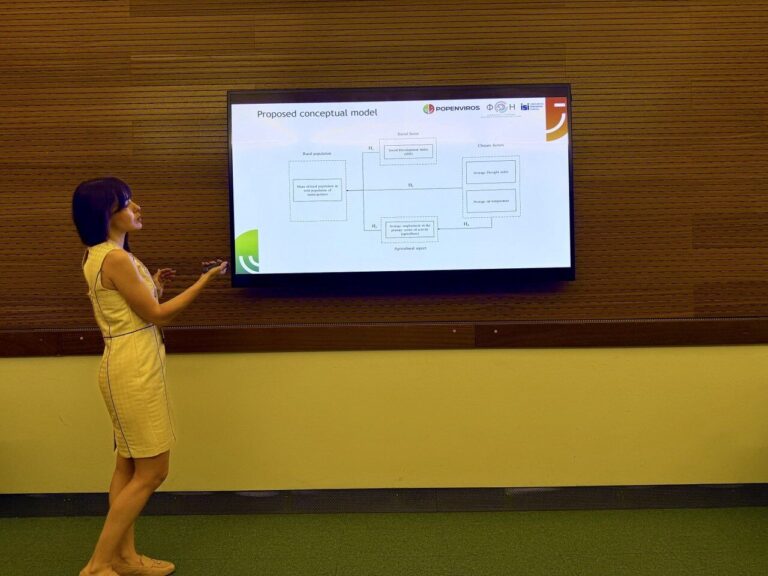
The POPENVIROS project was represented at the 5th ISI Regional Statistical Conference (3-5 June, Malta), where an invited paper session titled “Environment and gender population dynamics: What is the nexus on global and regional level?” was organised by Milica Maričić, a member of the POPENVIROS team. Her initiative and coordination were essential for shaping the session and bringing together researchers working at the intersection of environmental and demographic studies. The session featured three complementary papers …
POPENVIROS at EPC 2026 in Bologna

The POPENVIROS research team is participating in the European Population Conference 2026 (EPC 2026), the leading European scientific event in the field of demography, held this year in Bologna. The conference brings together more than 1,000 participants from across Europe and beyond, featuring a rich program with dozens of thematic sessions. EPC 2026 is organized under the theme “Meeting New Realities”, emphasizing the importance of population research in addressing contemporary societal challenges. 🔹 Opening Ceremony …
New international publication on the project POPENVIROS

We are pleased to share that our new paper, developed within the POPENVIROS project, has been published in Earth Systems and Environment (Springer). The study provides a detailed assessment of winter mortality in Vojvodina, using daily CHIRTS temperatures and disaggregated mortality data. 🔍 Key findings: These findings highlight the strong interplay between extreme weather events and respiratory infections, as well as the importance of timely public health interventions during periods of severe cold stress. 🔗 …
Participation at the GEOBALCANICA 2026 Conference
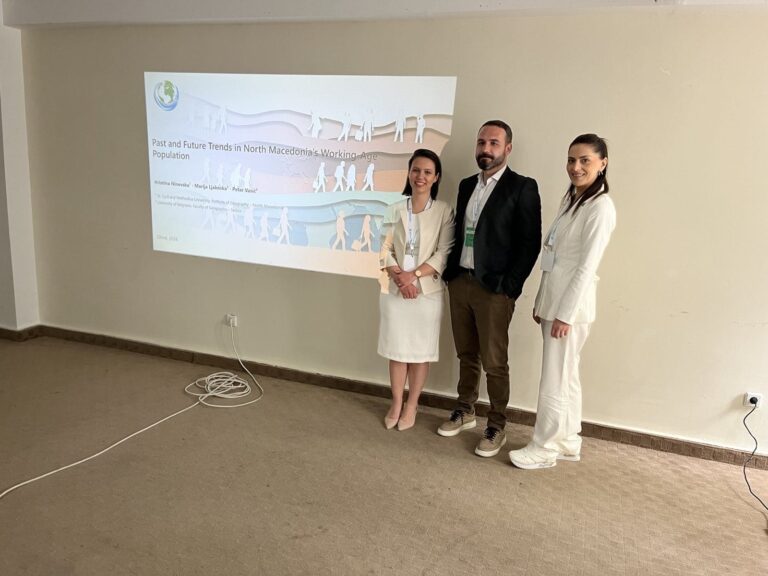
Petar Vasić, a member of the POPENVIROS project team, participated in the 10th jubilee international scientific conference GEOBALCANICA 2026, held from 6 to 7 May 2026 in Ohrid, Republic of North Macedonia. He took part in the conference as a co-author of two scientific papers and a presenter, contributing to the dissemination of research results developed within the POPENVIROS project. In addition, Petar Vasić served as the chair of the second session “Social and economic …
The Second Annual Reports has been accepted
We are pleased that the Second Administrative and Financial Report of the POPENVIROS project has been successfully accepted by the Science Fund of the Republic of Serbia. We wish the team members the best of luck in their future work!
POPENVIROS ON STORYTELLER PORTAL

Principal investigator Natalija Mirić participated in an interview for the Storyteller portal, discussing key demographic challenges in Serbia and the broader context shaping population trends. The full text is available at the this link.
Our session for the Regional Statistics Conference 2026 is now visible on the official platform

We are pleased to share that our session titled “Environment and gender population dynamics: What is the nexus on global and regional level?” submitted for the Regional Statistics Conference 2026 is now publicly available on the ISI Next platform:🔗 https://www.isi-next.org/proposals/proposal/1231/detail/ A big thank you to our team member Milica Maricic 🙌 for her exceptional effort, dedication, and energy invested in preparing and finalizing the session. Her professionalism and commitment significantly enhance the quality and visibility …
popenviros at the Euronews Morning Program

Principal Invastigator Natalija Mirić was a guest on the Euronews Morning Program. She spoke about internal and external migration of the population in Serbia, myths and prejudices about population relocation.Watch the full video at the link.
POPENVIROS in the series “First family steps – Demographic situation in Serbia”

“First Family Steps” is an educational and informative series designed to raise awareness of the importance of pro-natality measures and improving demographic parameters in the Republic of Serbia. Principal Invastigator Natalija Mirić explains what the current demographic picture of Serbia looks like, what the birth rate is and what a modern family looks like in Serbia today. Great attention is paid to young people, what steps and measures can help them become independent and start …